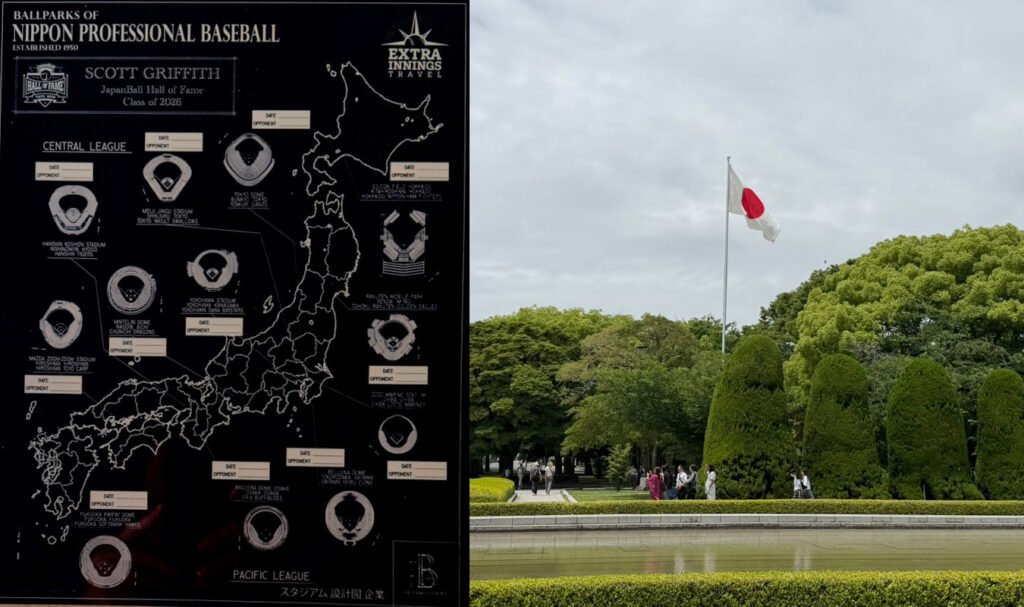
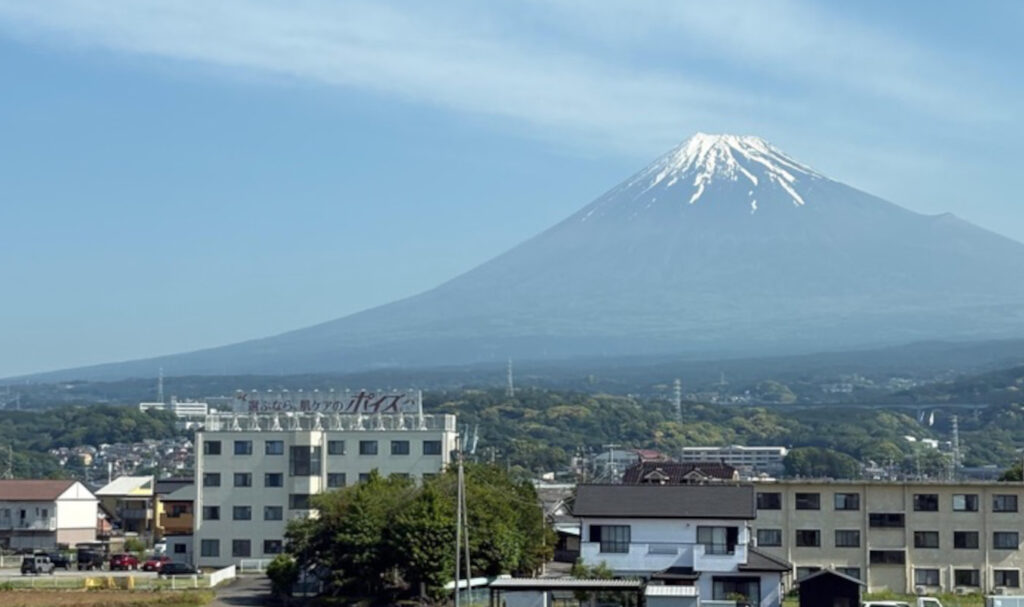
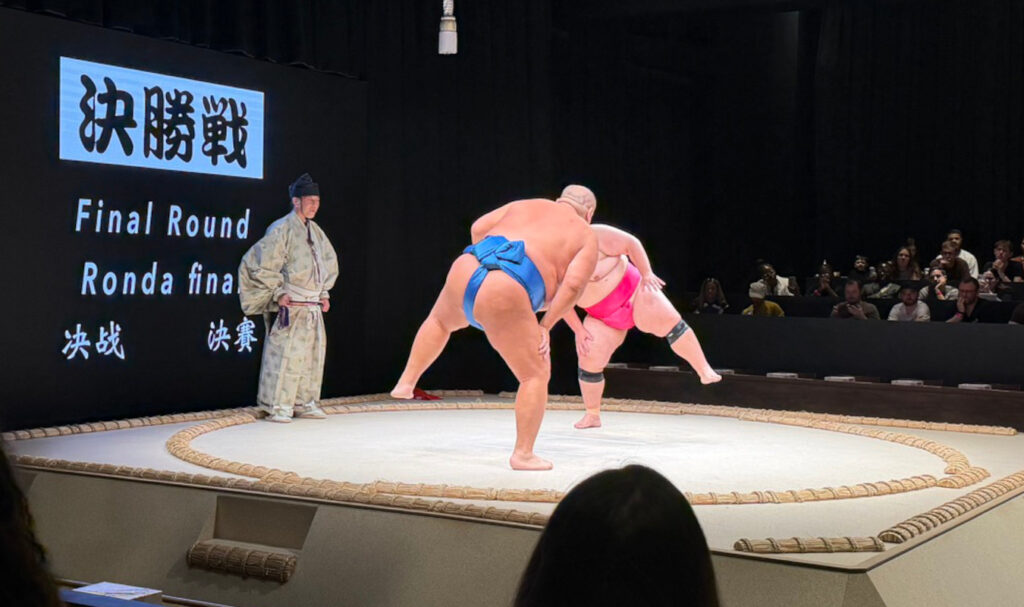
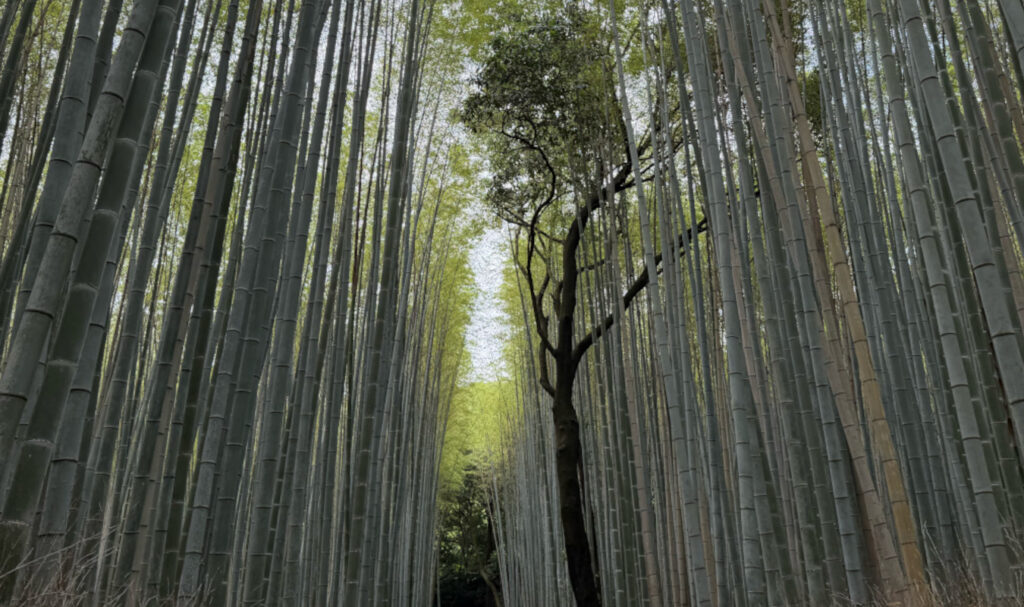
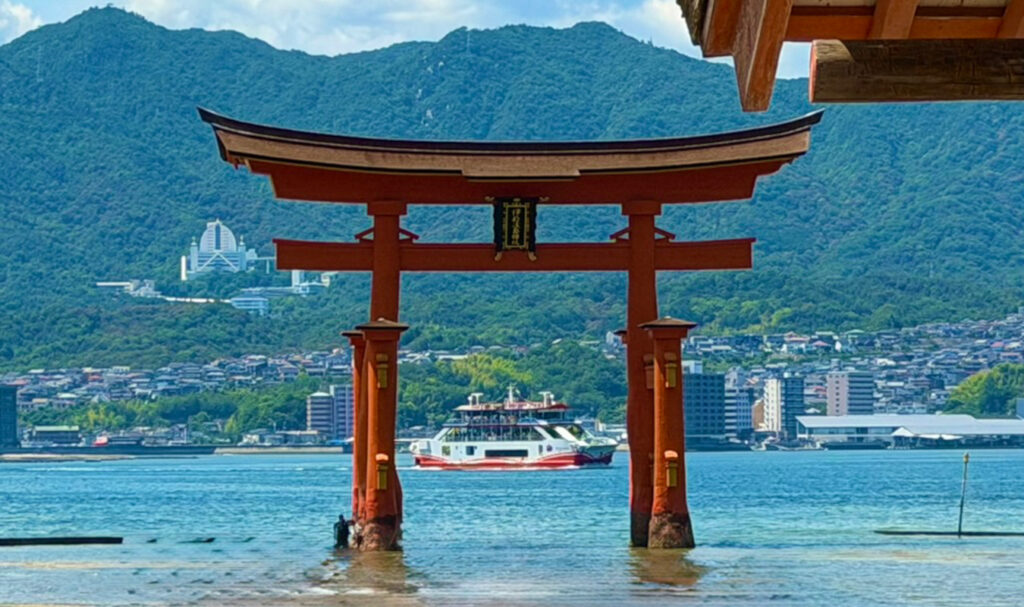
In May 2026, I took a once-in-a-lifetime trip to Japan. Japan had always been on my bucket list, and I thought a great way to see the country would be to do so through the lens of baseball. Yes, I saw all the things: Mt. Fuji, Shibuya Crossing, Senso-ji Temple, Dotonbori in Osaka, Itsukushima Shrine, Fushimi Inari shrine, and the Arashiyama Bamboo Forest. I witnessed a sumo wrestling match and a Japanese soccer game. I ate a lot of new yet delicious things, did a lot of smiling and pointing, and drank my fair share of beer and sake.
But the real purpose was to see all 12 NPB ballparks.
Japanese baseball is unlike anything I’ve been to in North America. There’s a fanatic energy from both the home and visiting supporters. The chanting and trumpets and drumming is incessant. The in-park soundtrack is way different. Frankly, it feels more like a soccer crowd.
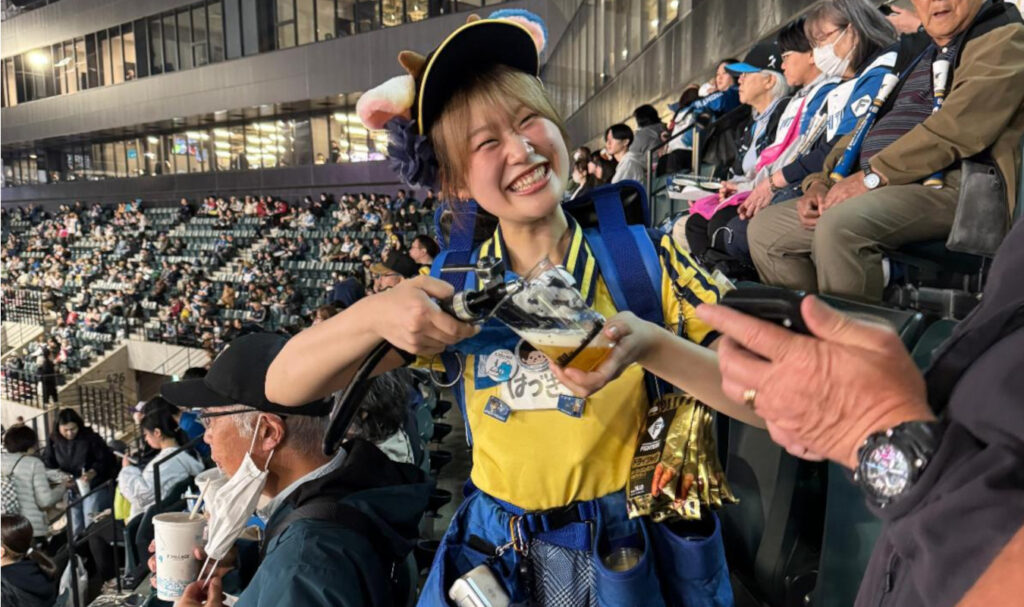
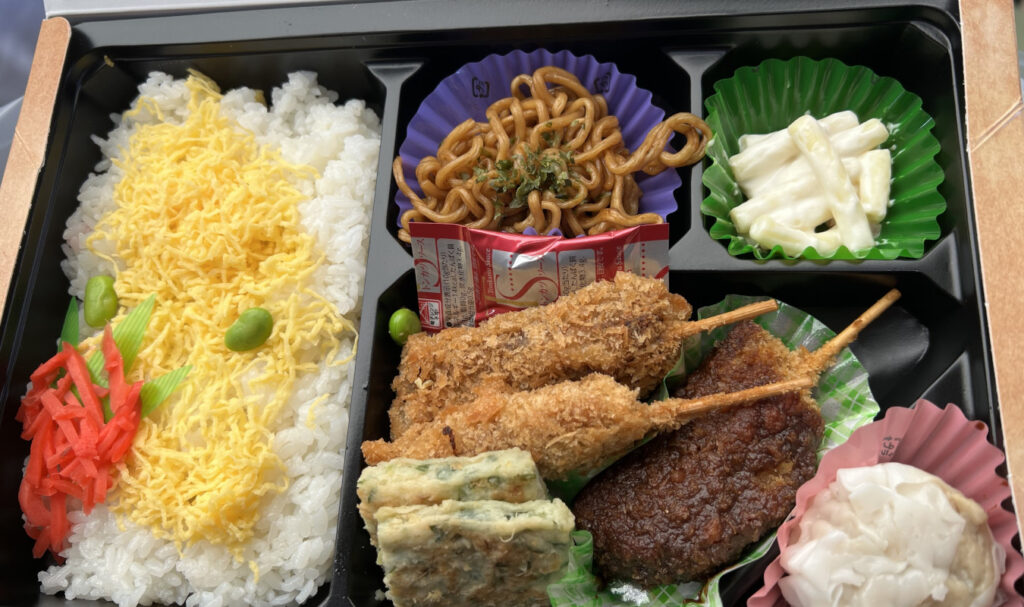
Prices are so much more reasonable thanks to a devalued yen. Food items are generally priced under $8 and are decent quality. It’s no wonder why most fans eat at the ballpark. Young, attractive, petite “beer girls” carry their weight in beer on their backs and bring fresh draft and a smile to your seat. This costs between 750 and 1,000 yen, and no tipping. That’s about $5 to $6 per beer!!
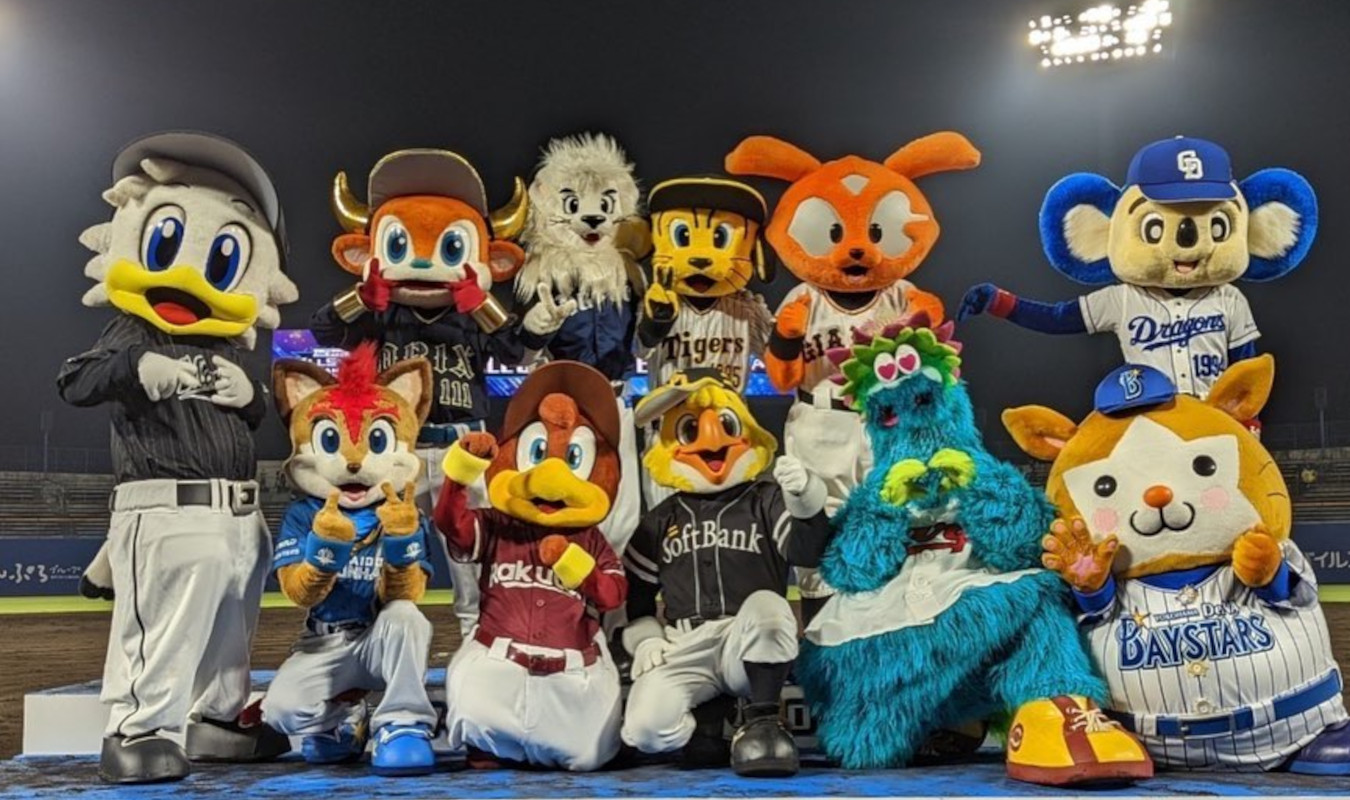
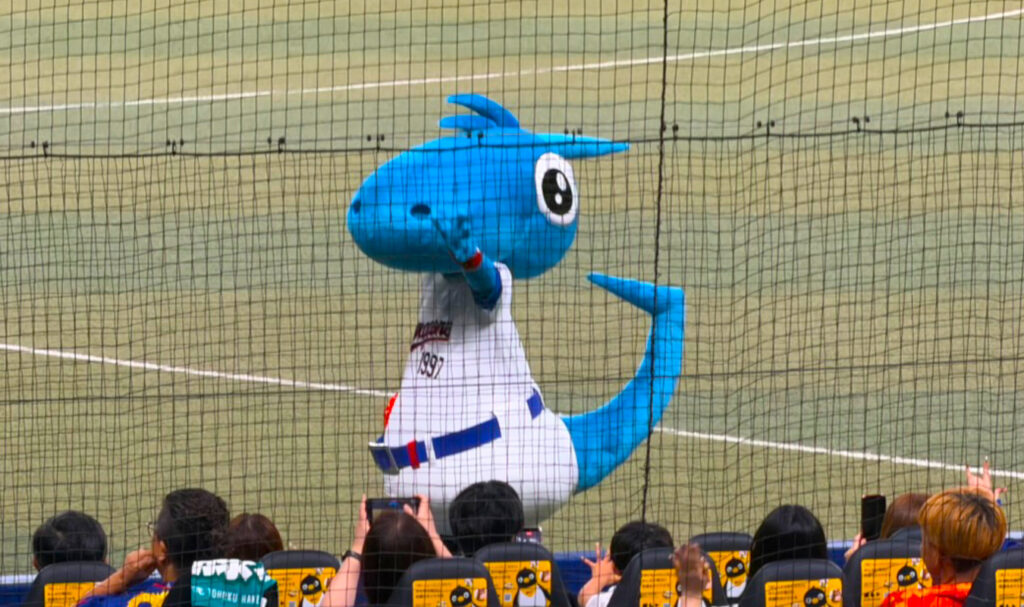
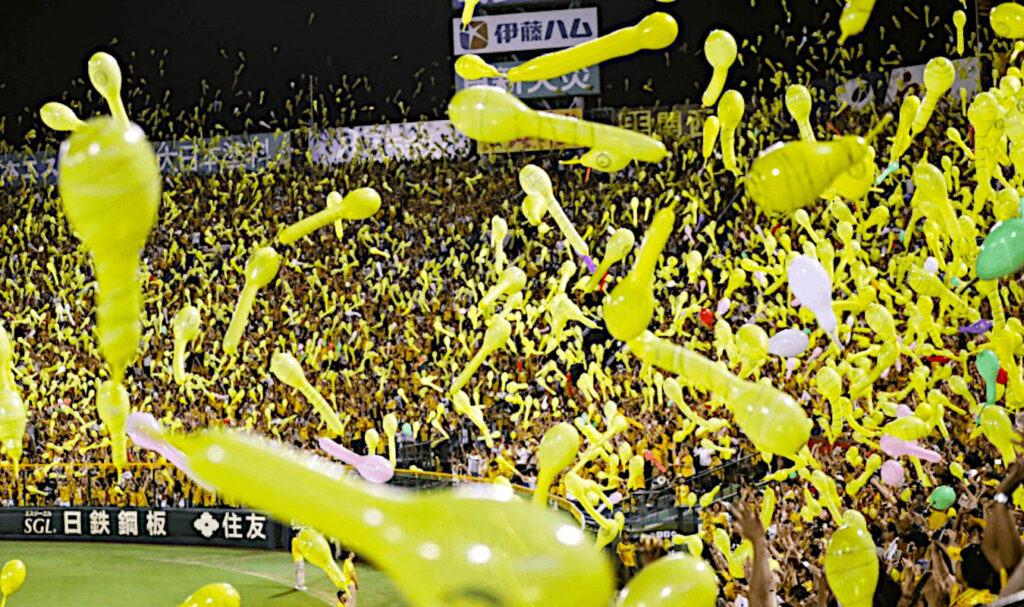
There were some fun traditions including a 7th inning stretch balloon release that looks very sexual. Each player has his own chant which most fans can sing. There are fun mascots and attractive cheerleaders. Some of the between-inning promotions are outright weird. It’s an assault on the senses, and something everything baseball fan should put on their bucket list. You won’t be disappointed.
Other differences between the Japanese and American experience
- Teams are often named after the lead sponsor rather than the home city. Imagine the Cablevision Guardians, or the Little Caesars Tigers.
- A game can end in a tie. If still tied after 12, the game is over. I saw my first official game in which a run wasn’t scored on this trip.
- The ballparks are older and, for the most part, not as nice as the Major League Baseball shrines. I got Arlington Stadium, Olympic Stadium, Kingdome, and Metrodome vibes with some of the physical structures. A lot of parks are 40+ years old.
- There are two leagues. In 2026, pitchers still hit in the more popular Central League, perhaps the last league to have the pitchers hit.
- There is no pitch clock, so games can last a while.
- The seats are Japanese size, so fat guys like me are squished in like its Fenway.
There are only 12 parks, though there’s quite a bit of variance between them. So here is my ranking of the twelve NPB ballparks:
RANKING THE 12 JAPANESE NPB BALLPARKS
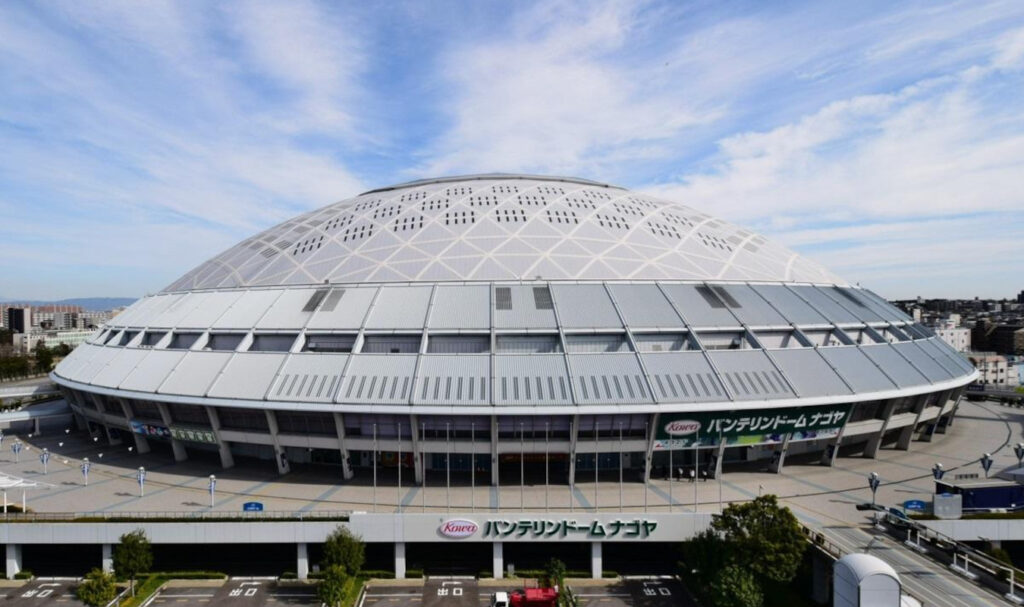
12. Valentine Dome Nagoya. Home of the Chunichi Dragons
This felt like a structure built in the 70s even though it was constructed in 1997. It’s a circular, geodesic indoor-only facility that seats 37,000 but lacks charm. Think Olympic Stadium or the Kingdome, but with wider concourses. It’s known as a pitcher’s park in part due to the high outfield walls and lots of foul territory.
It’s not all bad. The interesting diagrid roof is reminiscent of the British Museum. The seats are fairly wide by Japanese standards. There’s a Dragons’ Museum. The mascots are fun. Food, like many Japanese parks, was excellent with tamaben, dote stew, chicken wings, and fried skewered pork among the highlights. The walk to and from the train was straightforward, but a little long. It reminded me of the SkyWalk that connects Rogers Centre to the Toronto subway.
Dragons fans are passionate and a little self-depreciating due to the team’s prolonged struggles. Their cheering section is loud, and every player has their own chant. Overall, it was a cool vibe in a meh facility.

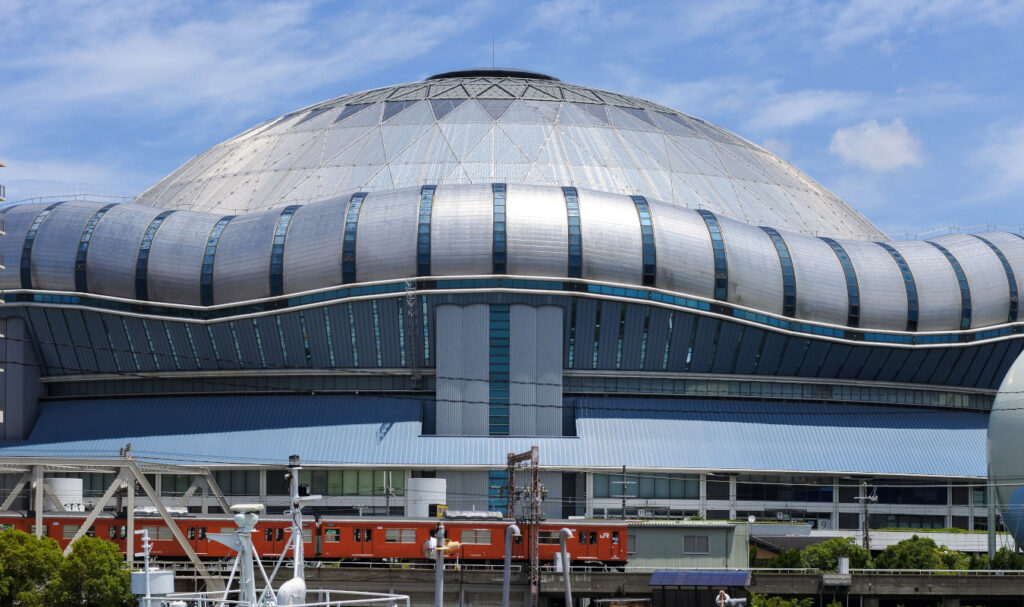
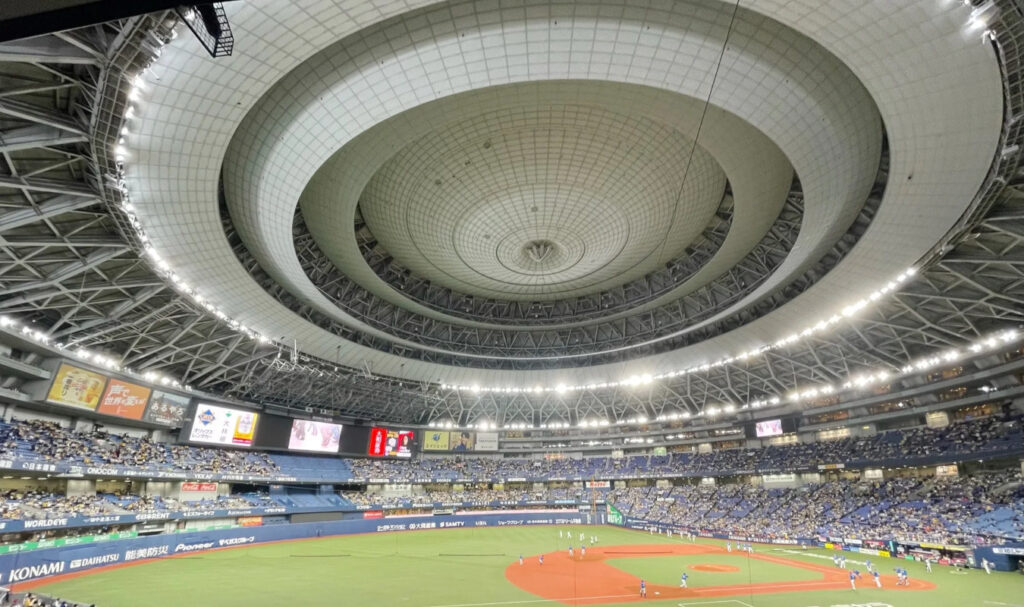
11. Kyocera Dome Osaka. Home of the Orix Buffaloes.
The roof structure is really cool: it really does look like a spaceship. Looking up at it from the inside looks as if a tornado is about to touch down. Otherwise, this is an antiseptic 36,000-seat dome.
The park was built in 1997, but feels more like a product of the 1980’s. We had great seats for our game that featured a little air conditioning, but leg room was cramped. “Normal” seats are quite small.
The park is attached to a large shopping mall next door which can be useful for pregaming. It’s immaculately clean and easy to get to. And unlike the other parks, our game did not draw a capacity crowd despite the home squad being a first place team, making ingress and egress a little easier, and lines for food a little shorter. Fans who did attend were loud and energetic.
I enjoyed my time in Osaka a lot. But the stadium itself was pretty ordinary. Except for that funky roof!
10. Tokyo Dome. Home of the Yomiuri Giants.
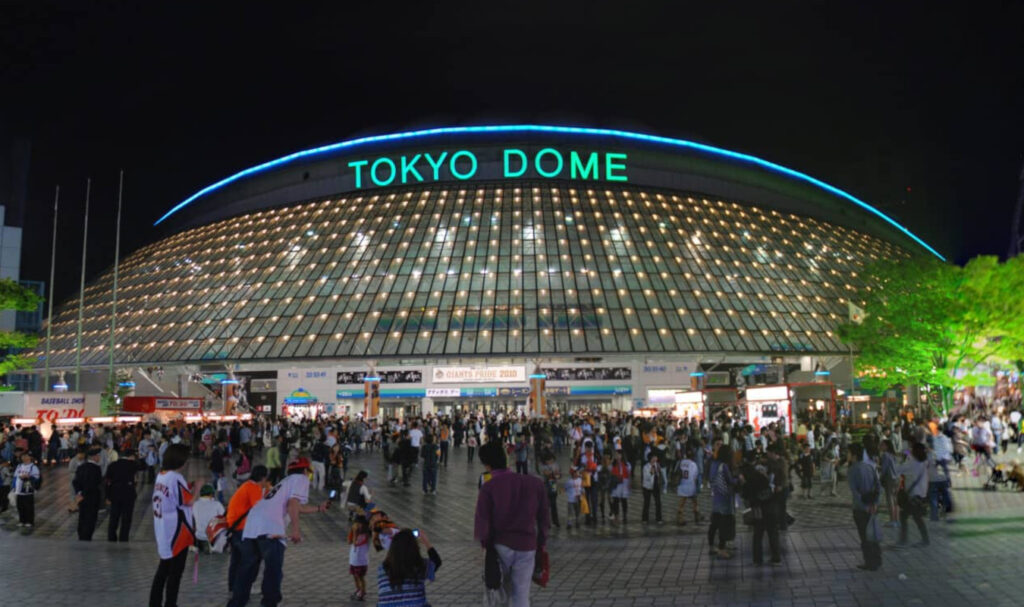
It’s odd that Japan’s “Yankee Stadium” feels a lot like the old Metrodome. The most famous baseball park in Japan elicited memories of Puckett and Hrbek rather than Ruth and Gehrig.
“The Big Egg” is a roof entirely supported by air pressure. Fans enter and exit through revolving doors to keep the extra air from leaving the building. Opened in 1988, it seats over 45,000 for baseball, making it the largest baseball stadium in Japan.
Tokyo Dome is part of a greater entertainment complex known as Tokyo Dome City, and includes an amusement park, various shops, restaurants, video game centers and the Japanese Baseball Hall of Fame. There was even a Shake Shack accessible from both inside and outside the stadium.
Food and beer were a little more expensive than other parks, but still remarkably affordable given the favorable exchange rate. Seats, as in many Japanese parks, were cramped.
The atmosphere inside was great, even by Japan’s standards. The Dome is in Japan’s largest city, houses its most famous team, and has the largest seating capacity. So the games feel a little more amped, and a little more important. Too bad they’re played in a facility that brought me back to 1980s baseball.

9. Meiji Jingu Stadium. Home of the Tokyo Yakult Swallows
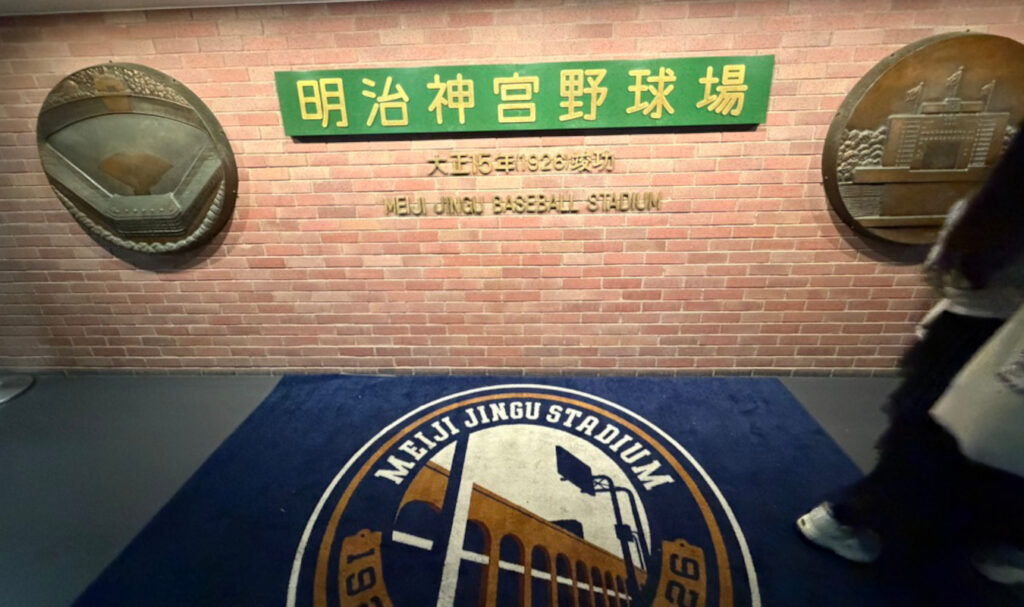
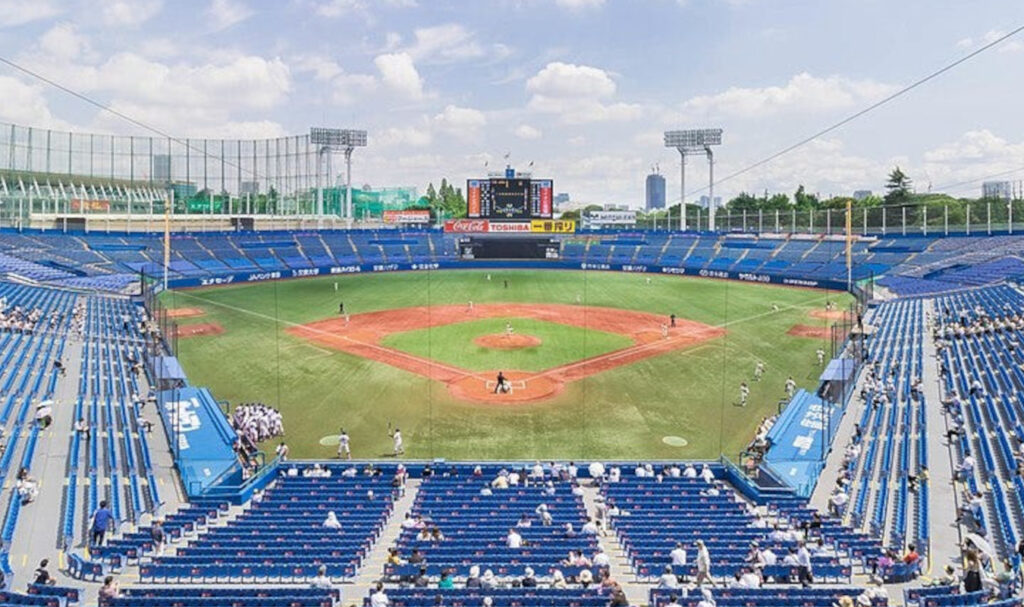
I really wanted to like this park. It’s the second oldest facility in the NPB, and one of only four ballparks still standing in which Babe Ruth played. I was hoping for a Fenway or Wrigley vibe. Instead, I got Jarry Park vibes. It just felt old and basic rather than classic.
Located in central Tokyo, the park is easy to get to from anywhere in the city. They have a great fan experience with the “Umbrella Dance”, one of the more famous fan traditions in the NPB. Fans pop open miniature, brightly colored umbrellas and bounce them in rhythmic unison while singing the team’s fight song to celebrate runs. Unfortunately, a paltry showing by the Swallows’ offense meant relatively few umbrella dances.
The stadium has a limited footprint which makes concessions, team merchandise and other stadium experiences much more limited. Rows are exceedingly tight. Concourses were tiny and tricky to navigate. And the interior bowl didn’t really feel that classic given the artificial surface and blue plastic seats.
This is a ballpark owned by the Meiji shrine. But it wasn’t really a religious experience. IMHO.
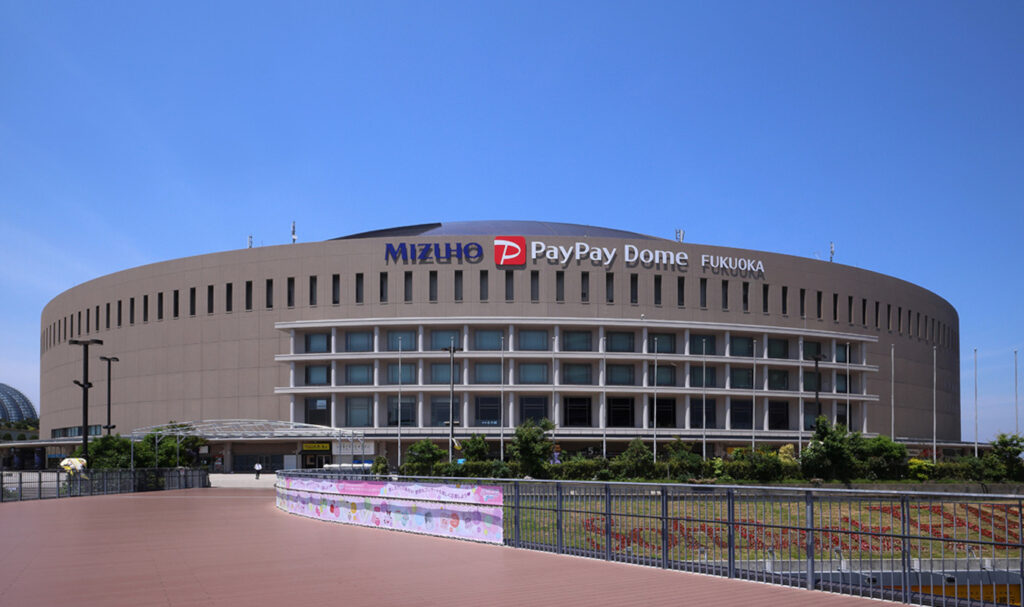
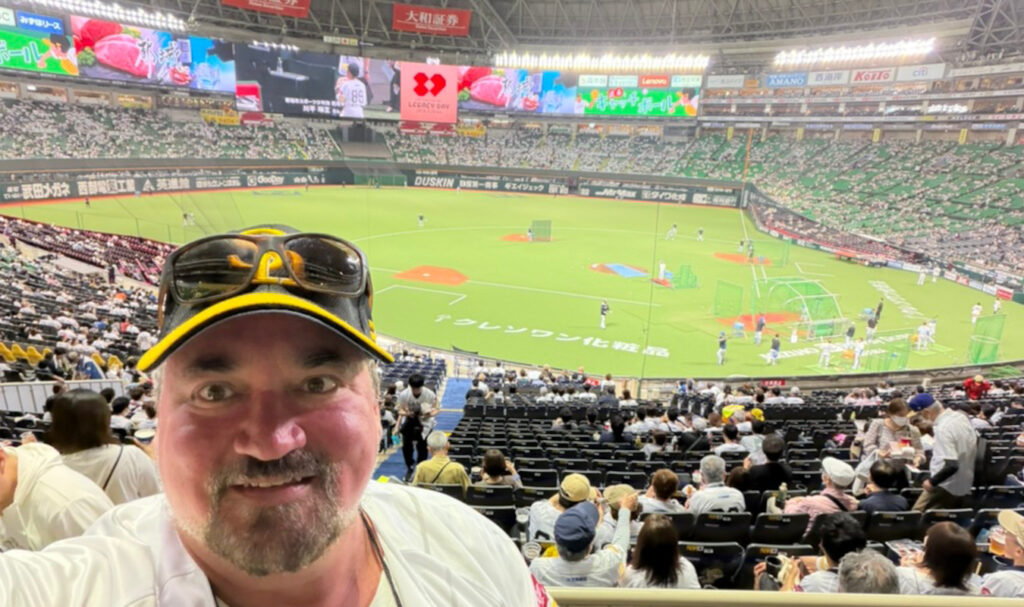
8. Mizuho PayPay Dome. Home of the Fukuoka SoftBank Hawks.
Another dome, Japan’s first retractable roof stadium. Unfortunately, it costs a million yen to open and close the titanium roof, so they don’t open it often.
The stadium seats 40,142 making it the largest in the Pacific League. The scoreboard is huge, and the crowd seemed particularly amped even by Japan Ball standards. They are one of the teams who participate in the 7th Inning balloon release, a tradition where fans release biogradeable sperm-shaped balloons. It felt particularly impressive in the packed dome.
The park was a good 20-minute hike from the subway station. This is fine on a nice day but could be an issue with rain or heat. (Fukuoka is the southernmost city in the NPB, which means more hot days). It’s attached to the Sadaharu Oh Museum, a most worthy visit. Perhaps that attraction moves this place up the list a little.
7. Belluna Dome. Home of the Saitama Seibu Lions
This one is a polarizing venue. My guide at Extra Innings Travel labeled it his least favorite ballpark. I didn’t feel that way.
There’s a nifty plaza just outside the ballpark for concessions and souvenirs. The crowd was loud and spirited. All 31,355 seats were occupied to see their first-place Lions.
In fairness, it’s tricky to get to via public transit as it involves long train rides from Tokyo, the last part on the private railway operated by the team’s owner. Seats, like many in Japan, are small. The dome can hold quite a bit of heat and humidity. Food choices are solid, but other ballparks had better offers.
On the other hand, this wasn’t originally built as a dome. This was an open-air stadium built into a hill in 1978. A roof was put on retroactively in 1998. The result is an “open air dome”: the roof doesn’t enclose the place, it simply covers it. Think T-Mobile Park, but not retractable. It’s quirky, and I think in a cool way. That said, you’re exposed to the elements somewhat. Cold nights will be chilly. Warm days will be stuffy. And if the rain is coming horizontally, you will get wet.
In all, the really crazy roof structure moved this up the list for no other reason that its unique.


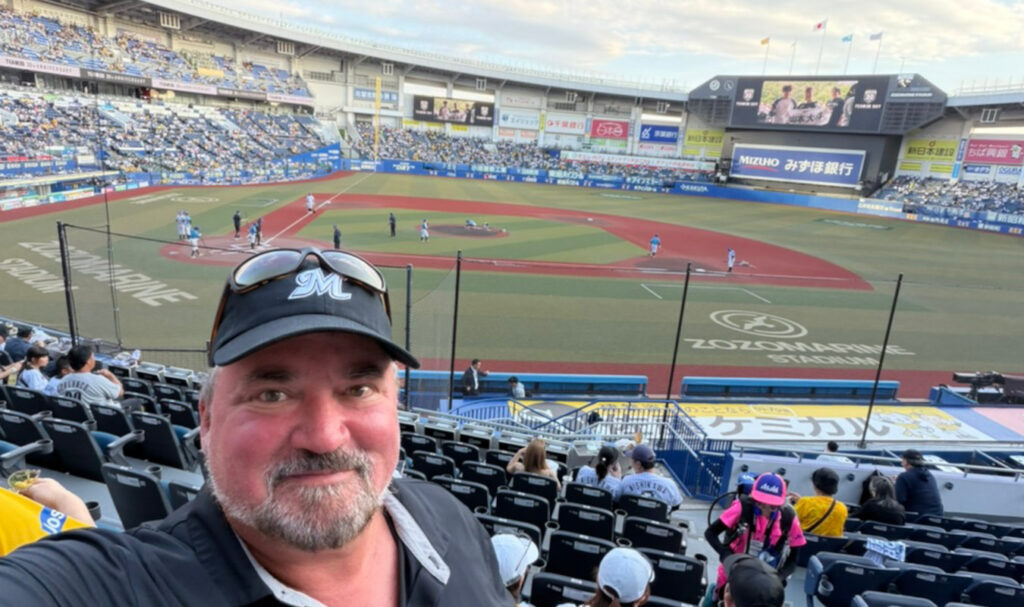
6. Zozo Marine Stadium. Home of the Chiba Lotte Marines
It was a hike from central Tokyo, taking over 90 minutes of public transit. While we had a toasty night, the marine-front location occasionally brings in cold breezes. In fact, the park has been unfavorably compared to Candlestick Park for its possible frigid nights. The inside is pretty generic, with a single seating bowl and an artificial surface. And they don’t really make use of their waterfront location with any views to speak of.
But for some reason, I liked it. Perhaps more than the average fan.
They have a killer pre-game set up with food trucks lining the exterior of the stadium selling all sorts of yummy vittles. You can stand at a high-top table and enjoy your meal and a beer before even entering the ballpark. The team shop was great. And seats felt a little less tight than in other parks.
It’s the smallest stadium in the NPB with capacity under 30,000. But it felt like a solid place to catch a game.

5. Yokohama Stadium. Home of the DeNA BayStars
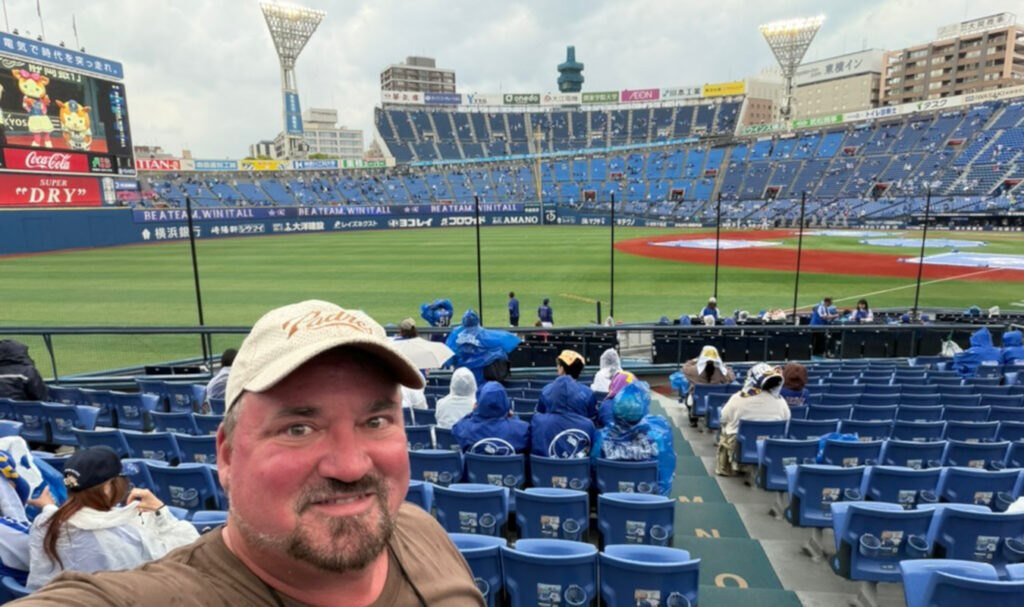
This was my first Japanese stadium so will likely get some benefit of the doubt. Built in 1978, the stadium has a little of a pre-Mount Davis Oakland Coliseum feel. There’s huge foul territory, a general circular shape, and lots of concrete. Renovated in 2007, capacity was expanded to 34,000. Field is turf, which came in handy after a hard thunderstorm ending just an hour before first pitch.
The foul poles down the line are just 308 feet from home. The light stands in the outfield are Y-shaped, which seem appropriate for a Y-okohama team.
The pork dumplings are amazing. The “beer girls” are plentiful, so you’ll never go thirsty. The stadium allows in-and-out privileges in case you wanted something from a food truck rather than braving the long lines.
BayStar fans are friendly to newcomers. It’s very family-friendly with lots of promotions between innings, and a fair number of kids there. The cheering section does a “roll call” similar to the Yankee Bleacher Creatures.
It feels like a 70’s stadium in some regards, because it is. Seats are tight, there aren’t enough Men’s rooms, and some sightlines can be a little sketchy at times. But it’s a pure baseball experience, and will always be my first NPB park.

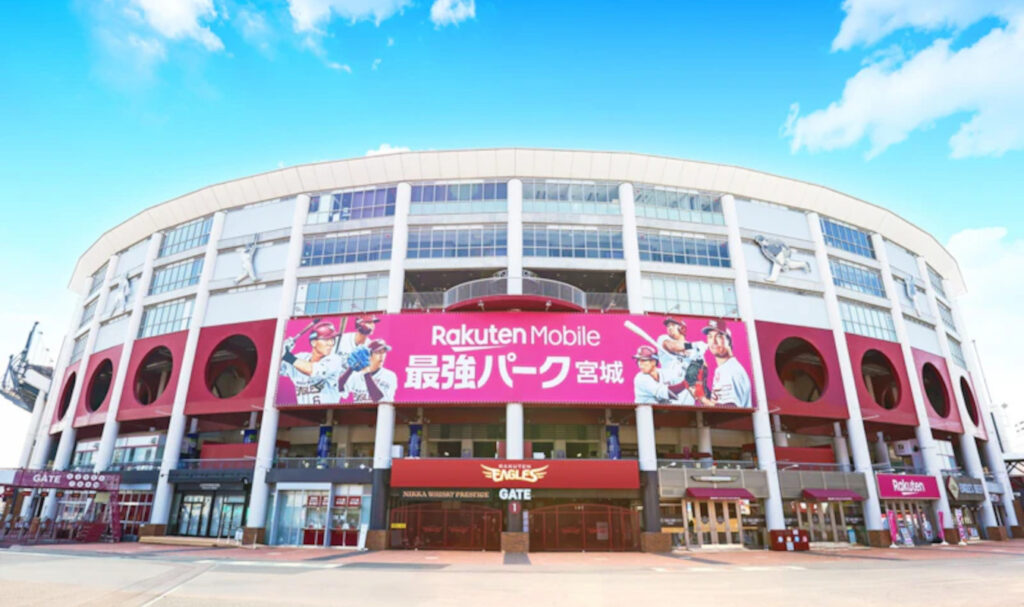
4. Rakuten Mobile Park Miyagi. Home of the Tohoku Rakuten Golden Eagles in Sendai.
Sendai is the smallest city to host an NPB team (unless you count the Tokyo suburb of Chiba as its own city). The Eagles, despite their cellar-dwelling, fill most of their 30,500 seats in this rather quirky park.
The original structure opened in 1950, but it’s been expanded a few times. It was given an extensive upgrade after Sendai was given an expansion team in 2005. Renovations continued after the 2011 earthquake that hit this area hard, and again in 2025. It felt a little like old Arlington Stadium in that the park felt a little patchwork with different seating styles.
The stadium features a free Ferris Wheel and a small midway in the outfield (great for kids), and some craft beer stands (great for me). A host of food trucks line the third-base side inside stadium grounds, but outside of stadium walls. They offer some fantastic options. The beer girls were frequent. The Eagles Nest on the first base side featured a nice social area. And the team shop at the front of the park was amazing.
Unlike other Japanese parks, the seats were tight to the field with relatively little foul territory in the outfield. Seating is snug for North American butts. Our game was a beautiful late spring day, which made outdoor baseball played on a grass field perfect.
This wouldn’t be a top 20 MLB facility, but I kinda liked its idiosyncrasy.

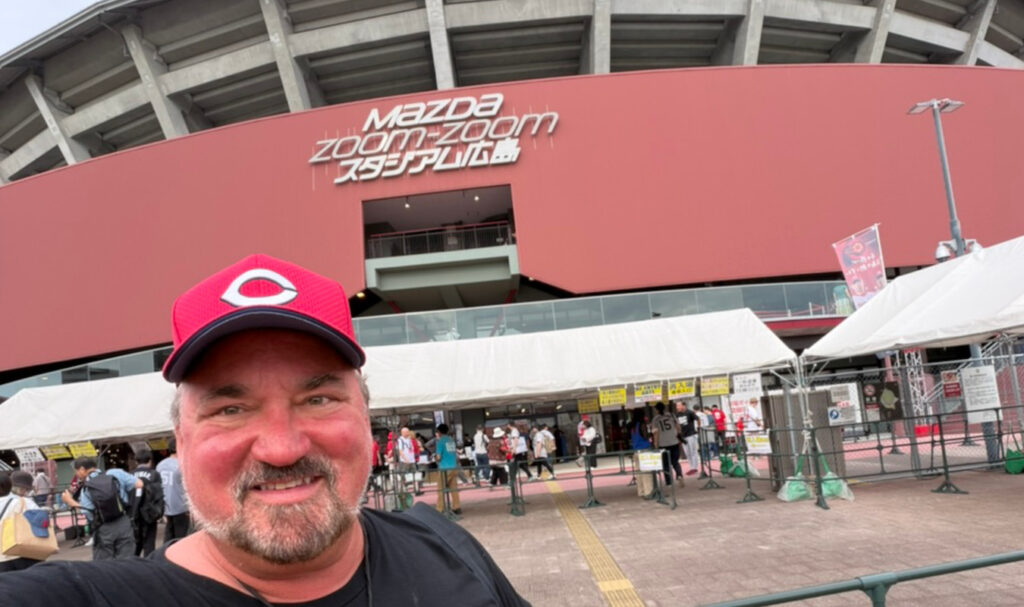
3. Mazda Zoom-Zoom Stadium. Home of the Hiroshima Carp
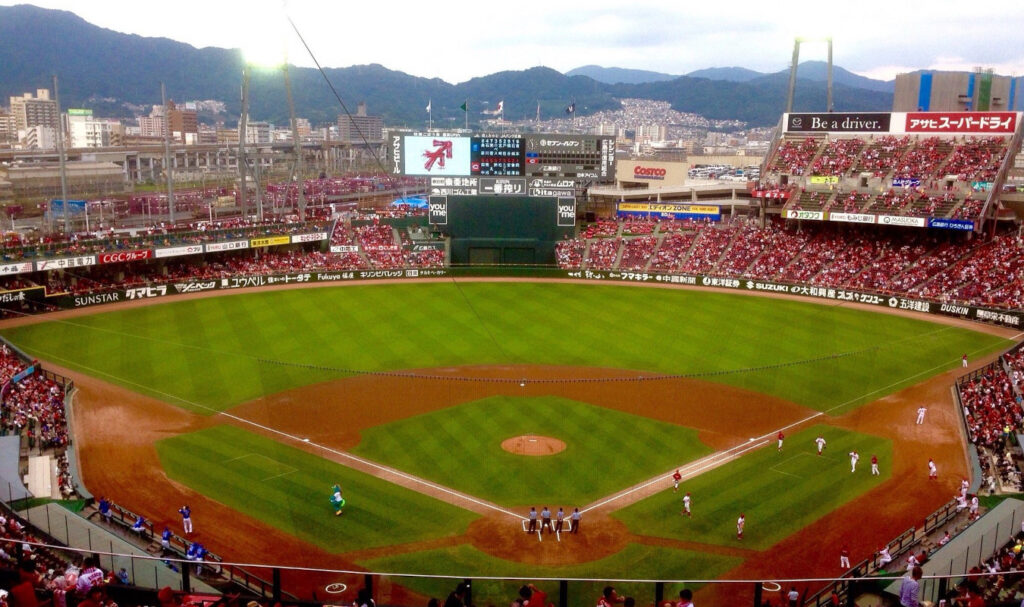
This is the first ballpark that I would consider 21st Century Major League quality. Opened in 2009, it’s a 33,000-seat outdoor facility with nice wide concourses, a grass field, decent-sized seats and a fun vibe.
The park was just a 15-minute walk from the hotel at Hiroshima Station. Views are stunning from the seats with nice panoramas of the mountains and the occasional passing bullet train. Sightlines are excellent as well.
Food is strong. In addition to the things found in other Japanese ballparks, you can also get Hiroshima-style okonomiyaki, a savory pancake. Others swear by the Carp Udon bowl with thick wheat noodles, dashi-soy broth, and a piece of sweet inari tofu shaped like a baseball. There are seats in the BBQ Terrace in which you get to grill your own (included) meats. You can even bring in your own thermos which may or may not contain sake. (Just saying).
Hiroshima was one of my favorite stops on the trip. The Peace Park Museum was sobering. Miyajima Island was amazing. And the vibe was a little more chill than the larger cities. A good ballpark just was the icing on the cake.
2. Hanshin Koshien Stadium. Home of the Hanshin Tigers.
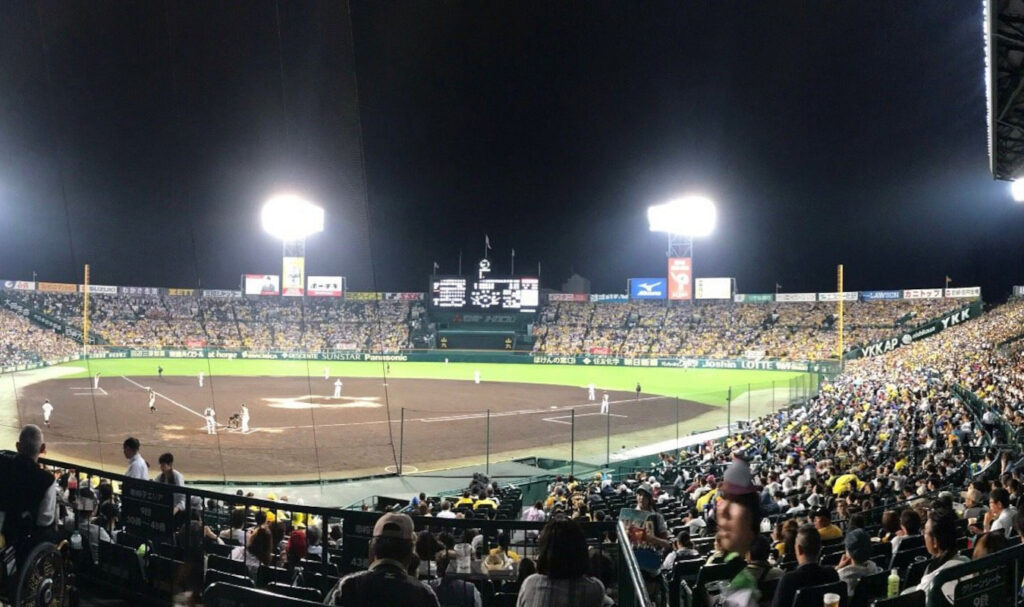
This is Japan’s baseball cathedral. It what I was hoping to get from the Swallows’ park. It’s a venerated place that has been kept up very well and overcomes its flaws swimmingly.
Located halfway between Kobe and Osaka, its home to the annual National High School Baseball Championship, played in August, and the annual National High School Baseball Invitational Tournament in March. If you’re not familiar with the importance of these tournaments, I suggest watching Koshien: Japan’s Field of Dreams on Netflix. It’s also home to perhaps the most ravenous fan base in the NPB.
It’s still has an all-dirt infield (largely due to its importance on the High School circuit). Our outfield seats were pleasantly roomy: a recent renovation took out thousands of seats to make the benches 50% wider. There’s ivy covering the exterior walls of the ballpark and an attached museum dedicated to high school baseball and the Hanshin Tigers. Just outside the park is a nearby shrine where people pray for Tigers’ prosperity. Among the stadium-side statues is one honoring Babe Ruth’s visit in 1934.
Like all older stadiums, concessions are ridiculously cramped. And with a capacity of over 43,500 that is always 100% sold out, it can get awfully crowded. The team has mitigated some that with a huge team store outside the stadium, some food trucks, and even a Hanshin Tigers convenience store. But expect to wriggle a little when not in your seat.
We had bad weather on our night which mitigated the experience a little. But I see the charm. I felt a different vibe. It’s a bucket list place for any ball fan.

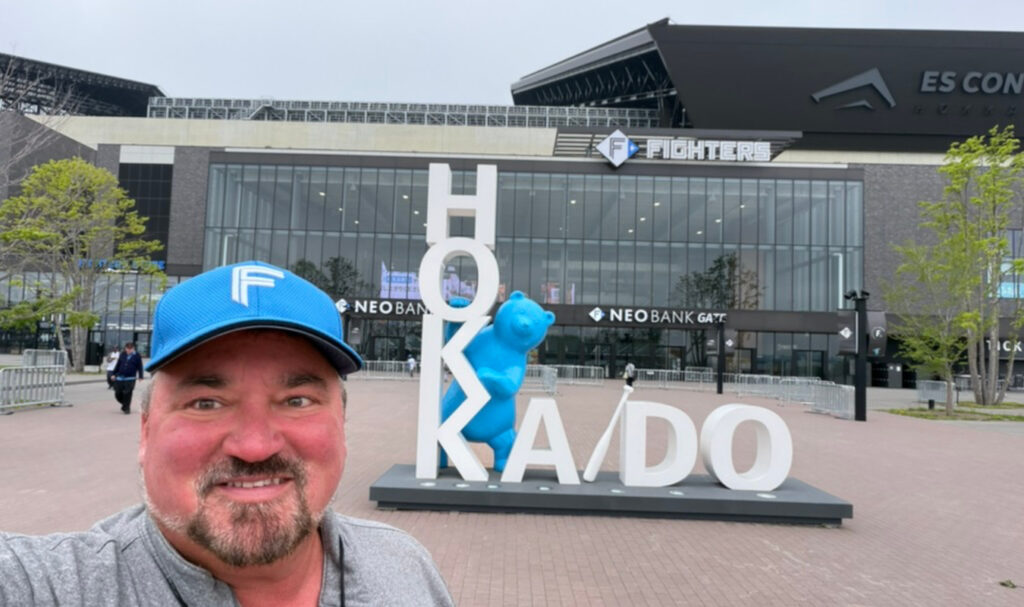
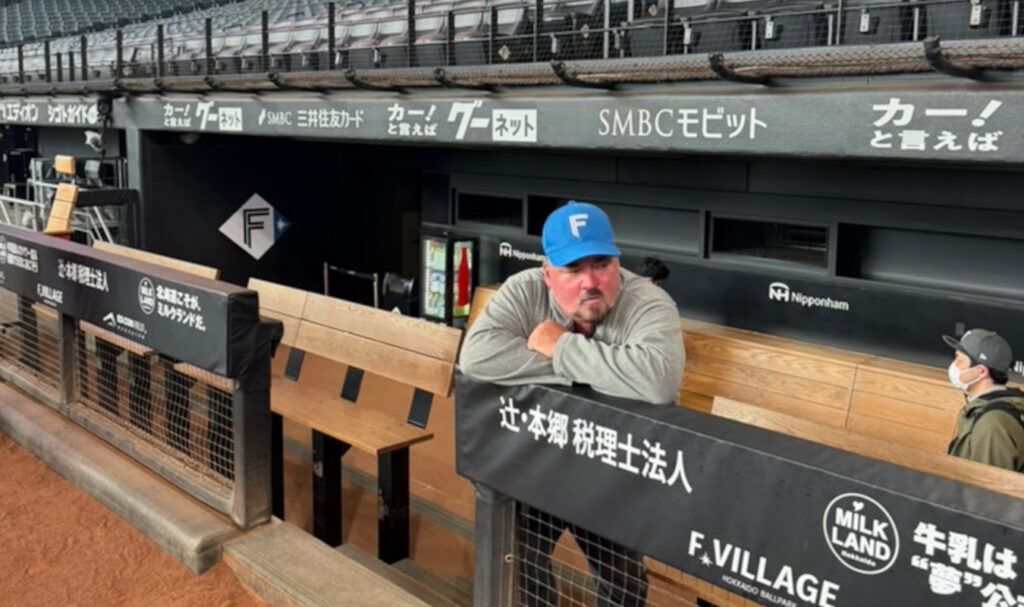
1. EsCon Field. Home of the Hokkaido Nippon Ham Fighters.
This is probably the only ballpark that would fit in the top half of MLB parks based on technical merit. It was also in Sapporo (technically Kitahiroshima, but close enough), one of my favorite stops on the entire tour. When you combine its technical brilliance, modernity, comfort, and unmatched amenities with the atmosphere of Japanese baseball, you have a winner. It was my favorite park in Japan.
Why it works
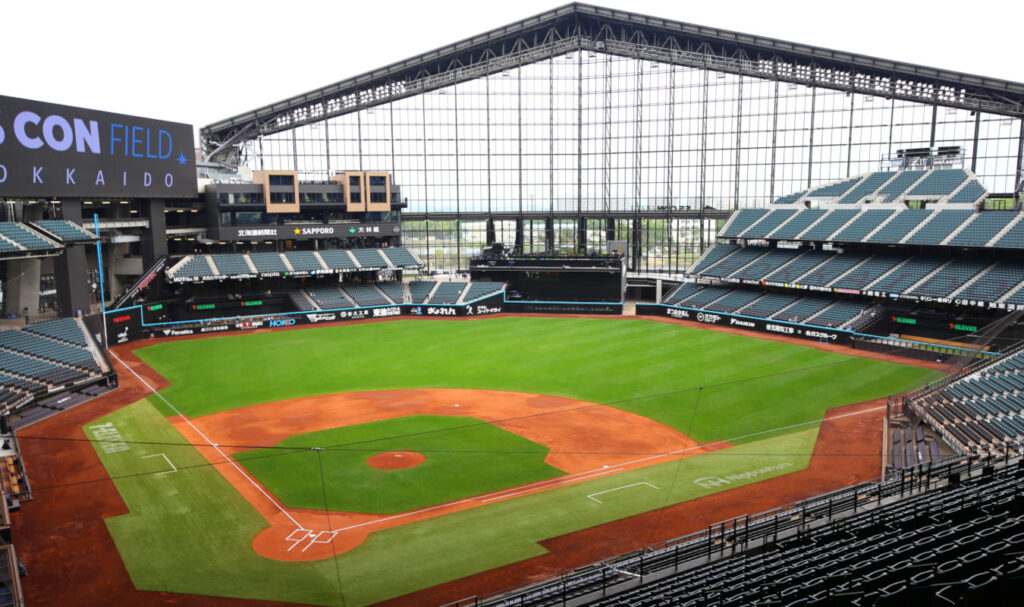
The park has a natural grass outfield despite being a “dome”. The roof, which is incredibly cost-efficient to operate, opens and closes several times daily to ensure the field gets natural sunlight and even some rain.
The builders built a beautiful ballpark, going beyond typical Japanese functionality. The large glass window lets in natural light even with the roof is closed. The hard angles of the roof, which evoke US Bank Field, the Vikings home in Minneapolis, can handle up to 14-feet of snow in the winter.
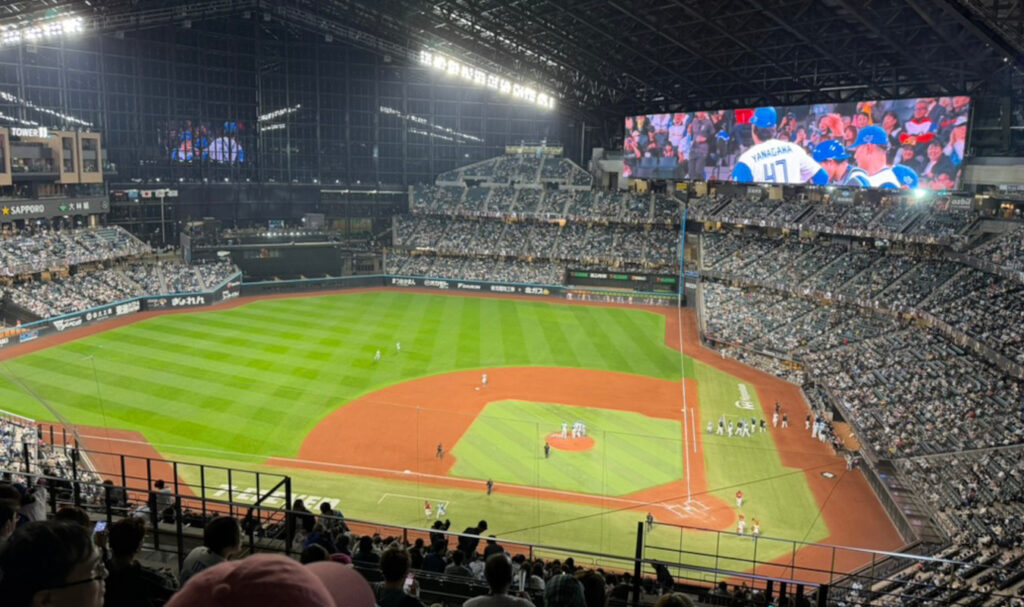
The park holds 35,000. Many seats are padded and are more generous for larger fans. Sightlines are the best in Japan. Unlike other Japanese fields, the seats are very close to the playing surface with minimal foul territory, especially behind the plate. The main scoreboard is massive. There are displays and memorabilia about the team dotted throughout the spacious concourses: this was the team for which Shohei Ohtani and Yu Darvish played. It features a few hotel rooms that overlook the stadium (a la Rogers Centre), and a sauna in with views of the field. For some reason, there’s even a horse racing simulator. You can even book a Skywalk tour to see the field from the inspection catwalk at the top of the glass wall, 70 meters above the ground.
Food is the best of any ballpark. Want Japanese staples such as Mos Burger and Mister Donut? Check. How about Japanese yummies such as yakitori sticks, croquettes, gyoza, fried chicken, bento boxes, and ramen? Check. “American-style” ballpark food. Why not? There are even several full-service restaurants for a sit down meal at the ballpark. In addition to the usual Sapporo, Kirin and Asahi, there are some craft beer options.
The place is sort of the middle of nowhere. While a subway stop is being built right by the park, for now your options are a 25-minute walk, or a 10-minute shuttle bus from the closest train station. But because it’s in the middle of nowhere, the team is building a surrounding neighborhood, F-village, much like the Battery in Atlanta. There’s an adventure park, a miniature ball field, some shops and some restaurants.
Purists will rightfully point out that a Koshien game has a better vibe. But for the total package, this is the best stadium in the NPB. Whether you fly or take a really long train, might as well head north for a game and see Japan’s premier ballpark.
Final Thoughts
An easy way to do this is to book through Extra Innings Travel. They’ve been doing JapanBall trips for years and have a host of good bilingual guides to help you navigate the public transit and the sights. They developed an itinerary that did a nice job of allowing us to see the country, while keeping a focus on baseball. Hotels and the group meals were solid, and your out-of-pocket once in Japan was very affordable. Your tickets may not always be in the best location, but it can be tricky for foreigners to buy baseball seats, so at least you can get in. Consider using them if you’re interested in a Japanese baseball trip. (This is an unpaid endorsement. I paid full price for my tour.)
But whether you go on an organized tour as I did, or cobble something together yourself, go. Japan was truly unreal. Banzai!